
20 Ancient Egyptian Landmarks Every Traveler Should Visit
Egypt is one of the world’s greatest destinations for history lovers, offering an extraordinary collection of ancient landmarks that have stood the test of time. From majestic pyramids and magnificent temples to royal tombs and monumental statues, the country is filled with remarkable sites that tell the story of one of the oldest civilizations in human history. Whether you’re visiting Egypt for the first time or returning to explore more of its treasures, these ancient landmarks provide an unforgettable journey through thousands of years of history.
Traveling across Egypt allows visitors to experience the incredible achievements of the ancient Egyptians while discovering the unique character of each region. Every landmark reflects a different chapter of the country’s rich heritage, showcasing remarkable architecture, artistic masterpieces, and engineering that continue to inspire the world today. Exploring these historical sites offers a deeper understanding of Egypt’s cultural legacy and the civilization that shaped it.
The Pyramids of Giza remain Egypt’s most famous landmark and one of the Seven Wonders of the Ancient World. Standing proudly on the edge of the desert, these monumental structures continue to amaze visitors with their scale, precision, and historical significance. Nearby, the Great Sphinx watches over the plateau, adding to the mystery and grandeur of this iconic destination.
In nearby Saqqara, travelers can visit the Step Pyramid of Djoser, considered the world’s first large-scale stone monument. This remarkable structure represents an important milestone in architectural history and provides fascinating insight into the early development of pyramid construction.
South of Cairo, the ancient city of Memphis reveals the remains of Egypt’s first capital. Visitors can admire impressive statues and archaeological discoveries that highlight the city’s importance during the earliest periods of Egyptian civilization.
Luxor is home to some of Egypt’s most spectacular landmarks. Karnak Temple, with its enormous columns and grand ceremonial halls, stands as one of the largest religious complexes ever built. Nearby, Luxor Temple showcases magnificent statues, elegant architecture, and beautifully preserved carvings that continue to impress visitors from around the world.
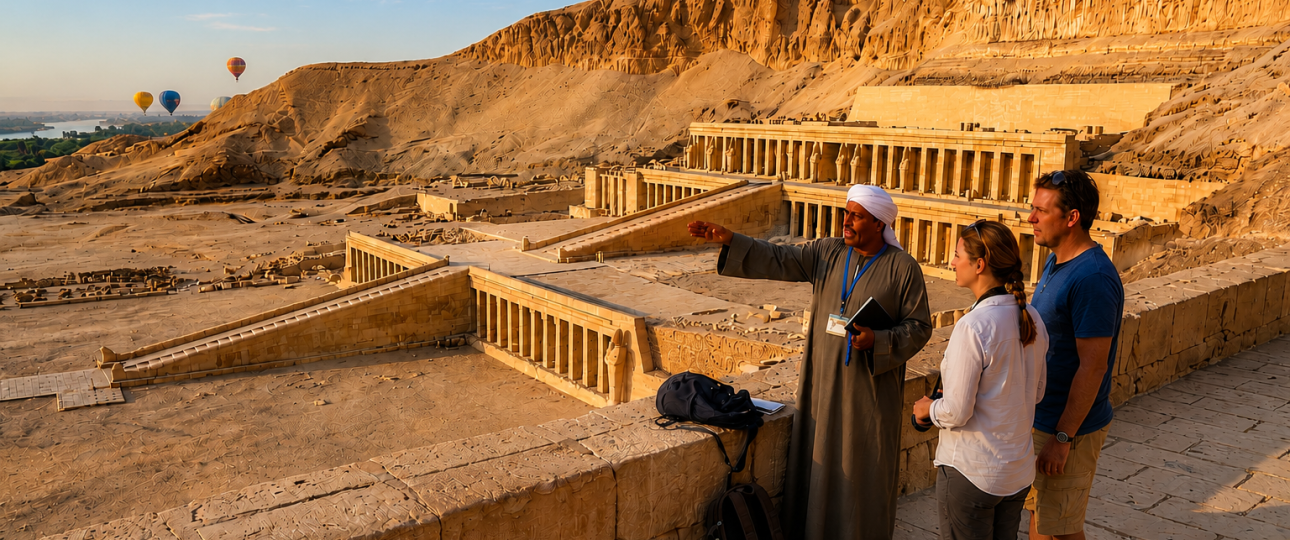
Across the Nile on Luxor’s West Bank lies the Valley of the Kings, where generations of pharaohs were buried in beautifully decorated tombs hidden beneath the desert hills. Close by, the Temple of Queen Hatshepsut rises dramatically against towering cliffs, demonstrating one of the most unique architectural designs in ancient Egypt. The nearby Colossi of Memnon, two massive stone statues that have guarded the Theban necropolis for centuries, remain one of Luxor’s most recognizable landmarks.
Travelers can also explore the Valley of the Queens, where members of the royal family were laid to rest in richly decorated tombs. The nearby Temple of Medinet Habu impresses visitors with its enormous walls, detailed reliefs, and exceptional state of preservation, while Deir el-Medina provides a fascinating look into the lives of the skilled craftsmen who built Egypt’s royal tombs.
Continuing south along the Nile, the Temple of Edfu stands as one of Egypt’s best-preserved ancient temples. Dedicated to Horus, it offers visitors an exceptional opportunity to experience ancient architecture in remarkable condition. Further along the river, Kom Ombo Temple overlooks the Nile with its unique double design dedicated to two ancient gods.
Aswan introduces travelers to another collection of extraordinary landmarks. The Temple of Philae, located on a beautiful island, combines elegant architecture with breathtaking Nile scenery. A short journey south leads to the magnificent Abu Simbel Temples, where colossal statues carved into solid rock celebrate the achievements of Pharaoh Ramses II and remain among Egypt’s greatest archaeological masterpieces.
Beyond the Nile Valley, travelers can discover several lesser-known but equally remarkable sites. The Temple of Dendera is admired for its beautifully preserved ceilings and detailed carvings, while Abydos Temple is one of Egypt’s most sacred religious centers, renowned for its historical importance and artistic excellence.
For those interested in Egypt’s Greco-Roman heritage, the Catacombs of Kom El Shoqafa and Pompey’s Pillar in Alexandria reveal another fascinating chapter of the country’s long history. These landmarks demonstrate how Egypt continued to thrive as an important cultural center long after the age of the pharaohs.
The best time to explore Egypt’s ancient landmarks is between October and April, when temperatures are comfortable for sightseeing. Lightweight clothing, comfortable walking shoes, sunscreen, and plenty of water are essential for visiting outdoor archaeological sites. Guided tours can also enrich the experience by providing valuable historical insights into each remarkable destination.
Egypt’s ancient landmarks are far more than impressive monuments—they are living chapters of one of the world’s greatest civilizations. From the iconic pyramids and magnificent temples to hidden tombs and ancient cities, every site tells a story that has shaped human history. Visiting these extraordinary landmarks offers travelers a deeper appreciation of Egypt’s remarkable past and creates unforgettable memories that will last a lifetime.